
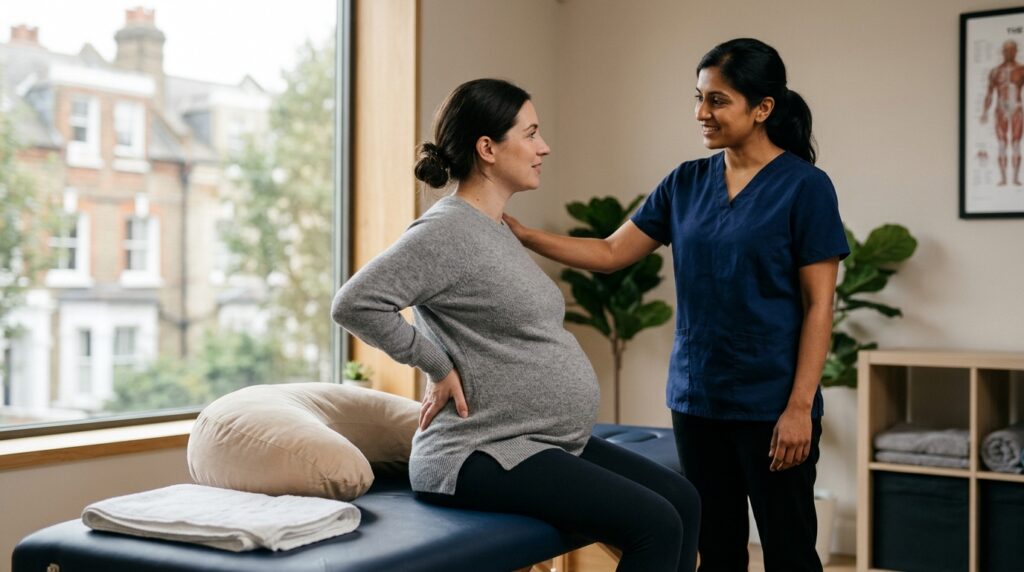
Lower back pain in pregnancy affects more than two in three expectant mothers, and it tends to build just as commuting, desk work and sleep get harder. As a clinic offering chiropractor for pregnancy near me care in Canary Wharf and the City, we see it regularly, from a dull evening ache to sharp pain that stops someone rolling over in bed. This guide covers why it happens, what you can safely do at home, which symptoms need your midwife first, and where hands-on care fits in.
Why Lower Back Pain in Pregnancy Happens
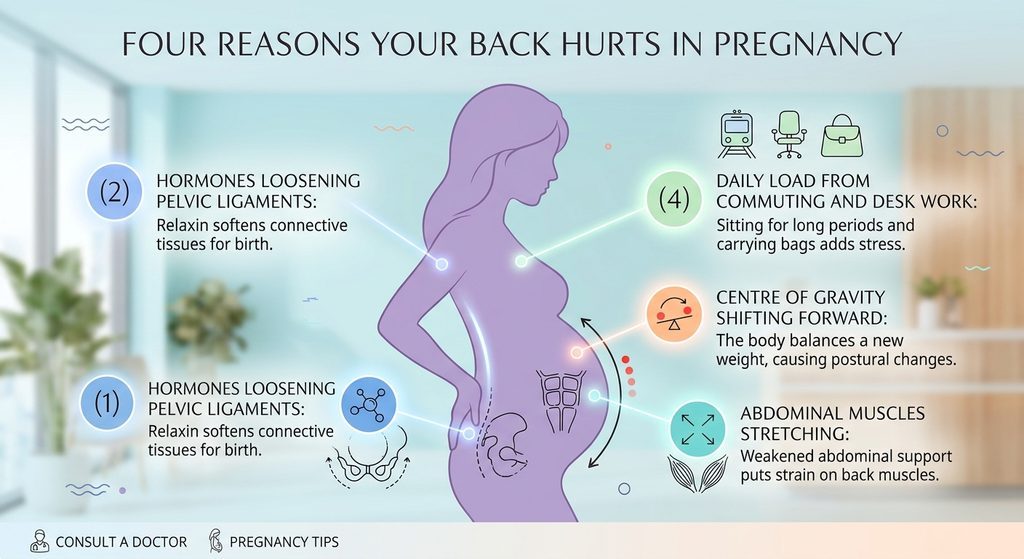
There is rarely one cause. In clinic, we usually find several changes stacking up over a few weeks.
Looser Ligaments
Hormones including relaxin soften the ligaments around your pelvis so it can widen for birth. The trade-off is less passive support for the lower back and pelvic joints, so the surrounding muscles work harder and tire sooner.
A Shifting Centre of Gravity
As your bump grows, your centre of gravity moves forward and most women lean back to compensate. Held for hours, that extra curve compresses the small joints of the lumbar spine and tightens the muscles beside it.
Stretched Abdominal Muscles
Your abdominal muscles lengthen to make room for the baby, so they offer less spinal support. The deep core, glutes and pelvic floor pick up the slack, which is why targeted strengthening helps.
Everyday Load
Standing on a crowded train, Tube station stairs, eight hours at a desk, then carrying shopping home: it adds up. Pain that is mild in the morning and worse by evening usually points to load rather than injury.
Lower Back Pain, Pelvic Girdle Pain or Sciatica?
“Back pain” in pregnancy is often a mix of conditions that respond to slightly different care, so telling them apart comes first.
| Lower back pain | Pelvic girdle pain (PGP) | Sciatica-type pain | |
|---|---|---|---|
| Where | Above the waist, either side of the spine | Pubic bone, buttocks, groin or inner thighs | Buttock and down the back of the leg |
| Feels like | Dull ache, stiffness | Sharp or catching, sometimes clicking | Burning, shooting or tingling |
| Worse with | Long standing or sitting, end of the day | Stairs, getting out of a car, rolling in bed | Prolonged sitting, bending |
According to the Royal College of Obstetricians and Gynaecologists, PGP affects around one in five pregnant women. True disc-related sciatica is less common in pregnancy than pain referring into the buttock from the sacroiliac joint. If leg symptoms dominate, our page on sciatica treatment explains how we assess nerve-related pain.
Who Is More Likely to Get It
Any pregnancy can bring back pain, but the odds rise with:
- Previous back or pelvic pain, including in an earlier pregnancy
- Hypermobility or naturally flexible joints
- More than one pregnancy, or carrying twins
- Long hours seated or standing with few breaks
Pregnancy is one of several back pain conditions that affect women, and existing problems often flare as hormones and posture change.
Safe Relief You Can Start at Home
Most cases improve with small daily changes. These are the measures we suggest first, in line with NHS advice on back pain in pregnancy.
Move Little and Often
Avoid sitting for more than 30 minutes at a stretch. Walking, aquanatal classes and pregnancy yoga with a qualified instructor keep the spine mobile without heavy loading.
Lift, Turn and Carry Smarter
- Bend your knees and keep your back straight when lifting
- Turn by moving your feet rather than twisting at the waist
- Split shopping evenly between two bags
- Wear flat, supportive shoes for the commute
Sleep and Pain Relief
Sleep on your side with a pillow between your knees and another under your bump. A warm bath or heat pack can ease muscle spasm. Paracetamol is generally considered suitable unless your GP or midwife advises otherwise; avoid ibuprofen unless a doctor recommends it.
Gentle Strengthening
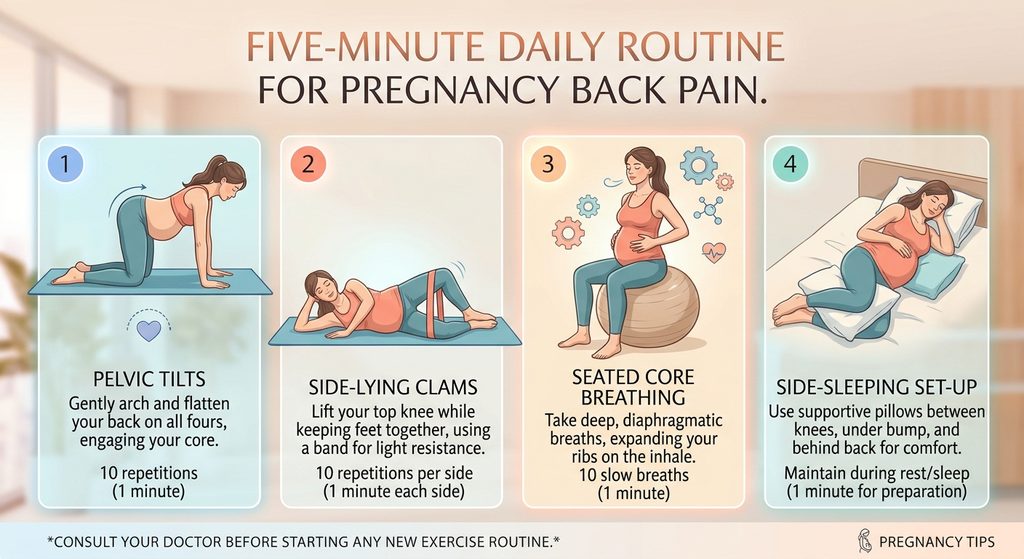
Exercise has the strongest evidence of any self-help option. A Cochrane review of pregnancy back and pelvic pain found land-based exercise reduced low back pain, and an eight to 12 week programme cut the number of women reporting combined back and pelvic pain. Good starting points:
- Pelvic tilts on all fours, gently rounding and flattening the lower back
- Side-lying clams to wake up the glutes
- Deep core breathing, drawing the lower tummy in as you breathe out
Stop anything that sharpens your pain, and check with your midwife before starting something new.
When to See a Chiropractor for Lower Back Pain in Pregnancy
Book an assessment with a prenatal chiropractor if:
- Pain has lasted more than a week or two despite self-help
- It wakes you at night or stops you sleeping on either side
- Walking, stairs or getting in and out of a car have become difficult
- You had back or pelvic pain in a previous pregnancy and want a plan early
What an Appointment Involves
We start with a full history, including your stage of pregnancy and anything your midwife has flagged, then assess how your spine, pelvis and hips move. Treatment uses side-lying positions and pregnancy cushions so there is no pressure on your bump, with low-force joint mobilisation, soft tissue work and exercises to take home. If you are searching for a pregnancy chiropractor near me, this is what good prenatal care should look like: gentle, tailored and coordinated with your midwife.
Is Chiropractic Safe in Pregnancy?
For uncomplicated pregnancies, modified chiropractic care from a practitioner registered with the General Chiropractic Council carries a low risk, and the Cochrane review found side effects from manual therapies were minor and short-lived. Research on manual therapy in pregnancy is smaller than research on exercise, which is why our plans always pair the two. We postpone treatment and refer you to your midwife if there is bleeding, a low-lying placenta, signs of early labour or raised blood pressure. Our earlier guide covers seeing a chiropractor during pregnancy in more depth.
Comparing Your Treatment Options
| Option | What it involves | Best suited to |
|---|---|---|
| Chiropractic care | Low-force mobilisation, soft tissue work, posture advice | Joint stiffness, one-sided pelvic or back pain |
| Physiotherapy | Exercise rehab, movement retraining, support belt advice | PGP, core and pelvic floor weakness |
| Pregnancy massage | Side-lying soft tissue massage | Muscle tension, poor sleep |
| Exercise classes | Aquanatal, pregnancy yoga or Pilates | Prevention once pain settles |
These work well together. Many patients combine chiropractic sessions with physiotherapy for structured exercise, or add pregnancy massage when sleep suffers in the later months. Our guide to chiropractic vs physiotherapy explains how the two differ.
Red Flags: When Back Pain Needs Your Midwife First
Contact your midwife, GP or maternity triage straight away if back pain comes with:
- Regular tightenings in your second or third trimester, which can signal early labour
- Vaginal bleeding or leaking fluid
- Fever or pain when passing urine, which can point to a kidney infection
- Pain in your side, under the ribs
- Severe headache, visual changes or sudden swelling
Call 999 or go to A&E if you lose feeling in your legs, bottom or genitals, or lose bladder or bowel control.
A Typical Clinical Picture We See
A composite example drawn from common presentations, not a single patient’s story.
Presentation: A first-time mother at around 26 weeks, working long days at a City desk, with a deep ache on the right of her lower back that worsens after the evening commute and catches when she turns in bed.
Assessment: An irritated right sacroiliac joint, tight hip muscles and hours of unbroken sitting. No red flags, and an uncomplicated pregnancy confirmed by her midwife.
Plan: Side-lying pelvic mobilisation, soft tissue work to the glutes and hip flexors, a daily routine of tilts, clams and core breathing, plus a lumbar cushion and a 30-minute movement reminder. We track night pain and end-of-day comfort, and review the plan as she moves into the third trimester.
Lower Back Pain Pregnancy Treatment in London
We offer lower back pain pregnancy treatment in London from two locations:
- Canary Wharf: Port East Building, close to the Elizabeth line, Jubilee line and DLR. See our page on back pain treatment in Canary Wharf.
- Monument: The Light Centre, near Monument and Bank. We treat back pain in pregnancy near Monument, with easy Northern line access from Clapham and south London.
Our clinics hold a 4.9 average rating across more than 300 patient reviews, and we are affiliated with the British Chiropractic Association and the Royal College of Chiropractors. We are registered with insurers including AXA PPP and Bupa, so check whether your policy covers back pain treatment in pregnancy in London and get an authorisation code before your first visit.
Frequently Asked Questions
-
Is it safe to see a chiropractor when pregnant?
For most uncomplicated pregnancies, yes. A registered chiropractor trained in prenatal care adapts every technique: you lie on your side or on pregnancy cushions, nothing presses on your bump, and adjustments are low force. They should take a full obstetric history first and postpone treatment if you have bleeding, a low-lying placenta, signs of early labour or high blood pressure. Let your midwife know so your care stays joined up.
-
When does lower back pain in pregnancy usually start?
It can start at any stage, but most women notice it building through the second trimester as the bump grows and posture changes. Ligament softening begins early, so some feel pelvic or back discomfort in the first trimester. Pain often peaks in the final months, when weight, broken sleep and reduced activity combine. Starting gentle exercise and good posture habits early is the most reliable way to keep symptoms manageable later.
-
How do I know if it is pelvic girdle pain or back pain?
Lower back pain usually sits above the waist, either side of the spine, and feels like a dull ache or stiffness. Pelvic girdle pain is lower down: over the pubic bone, in one or both buttocks, or in the groin and inner thighs. PGP tends to catch on stairs, getting out of a car, standing on one leg or rolling in bed. Many women have both, which is why a hands-on assessment helps.
-
What is the best sleeping position for pregnancy back pain?
Sleep on your side with your knees slightly bent and a pillow between your knees and ankles. This keeps your pelvis level and takes strain off the lower back and sacroiliac joints. A second pillow under your bump stops your trunk twisting forward, and a full-length pregnancy pillow can do both jobs. When turning over, keep your knees together and roll as one unit rather than leading with your top leg.
-
Can lower back pain be a sign of labour?
Sometimes. Back pain that comes in waves, builds in intensity or arrives with tightening across your bump can be a sign of labour, including early labour before 37 weeks. Pain alongside bleeding, leaking fluid, fever or pain when passing urine also needs prompt attention. If you are in your second or third trimester and the pain feels different from your usual ache, call your midwife or maternity unit straight away.
-
Will my back pain go away after the birth?
For most women it settles within weeks to months as hormone levels return to normal and the load on the spine drops. The RCOG notes that around one in ten women with pelvic girdle pain have symptoms that continue beyond this. Feeding posture, lifting a car seat and broken sleep can keep pain going, so continue your exercises. The POGP guidance for new mothers has useful postnatal advice.
Book a Pregnancy Back Pain Assessment
If lower back pain is making pregnancy harder than it needs to be, our team can find what is driving it and build a plan around your stage of pregnancy and your working week.
- Phone: 020 7531 4444
- Email: info@thisislondonwellness.com
- Canary Wharf: Port East Building, 14 Hertsmere Rd, London E14 4AF
- Monument: The Light Centre, 36 St Mary at Hill, London EC3R 8DU
You can also book online and choose the clinic that suits your commute.
A comfortable pregnancy starts with understanding your body, and support is closer than you think.