
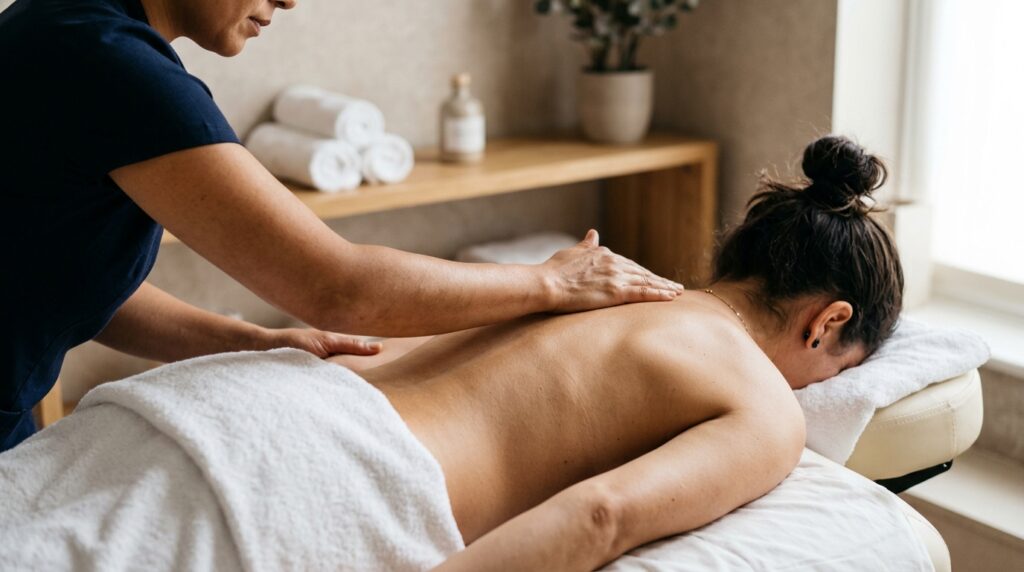
Deep tissue massage benefits are most noticeable when tension has been building for weeks or months: the stiff neck that never quite settles, the knot under the shoulder blade, the lower back that aches by mid-afternoon. If you have been searching for deep tissue massage near me in Canary Wharf or the City, this guide explains what the treatment actually does, what it helps with, which side effects are normal, and how to look after yourself afterwards so the results last.
What Is Deep Tissue Massage?
Deep tissue massage uses slow, sustained pressure to reach the deeper layers of muscle and the connective tissue (fascia) that surrounds them. The aim is not to push as hard as possible, but to work gradually through tight layers until they soften and release.
Techniques Your Therapist May Use
- Deep stripping: slow pressure along the length of a muscle using the thumb, knuckles or forearm
- Cross-fibre friction: short, firm strokes across a tight band or old scar tissue
- Trigger point therapy: steady pressure on a tender knot until it eases
- Myofascial release: sustained, gentle stretch of the fascia to free restricted movement
How It Differs From Sports Massage
Both use firm pressure, but deep tissue massage targets long-standing tension and chronic tightness, while sports massage is built around training, recovery and events. Many sessions blend the two, which is where the term deep tissue sports massage comes from. Our article on deep tissue vs sports massage compares them side by side.
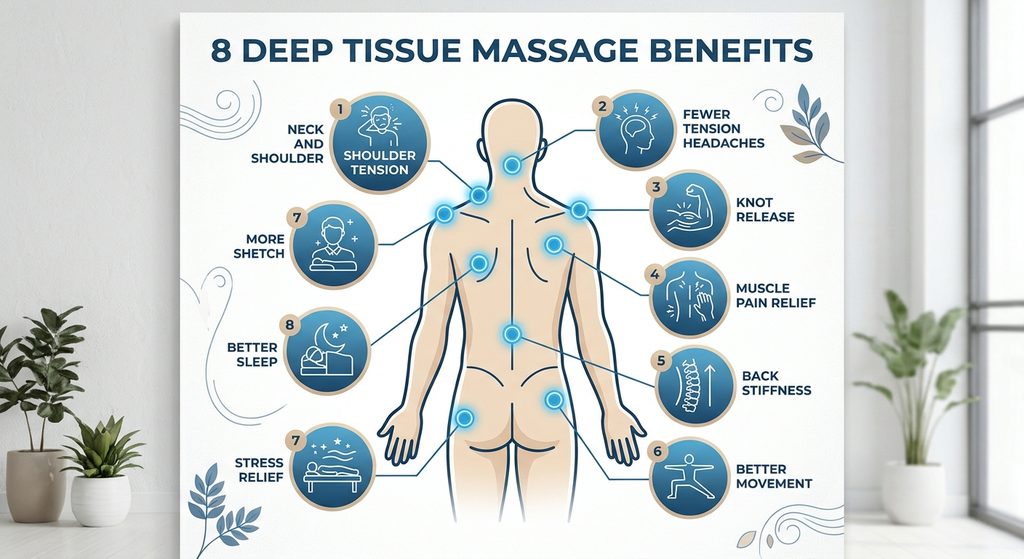
8 Deep Tissue Massage Benefits
1. Muscle Pain Relief for Chronic Tightness
This is the main reason people book. In a randomised trial of deep tissue massage for chronic low back pain, ten 30-minute sessions over two weeks significantly reduced pain and disability. Adding anti-inflammatory medication did not produce a significantly better result than massage alone.
2. Releasing Knots and Trigger Points
Trigger points are small, sensitive areas within a tight muscle that can refer pain elsewhere, for example from the upper shoulder into the head. Sustained pressure reduces their sensitivity and lets the surrounding muscle relax.
3. Easing Lower Back Stiffness
Tight muscles around the hips and lower back, especially the glutes and quadratus lumborum, are common contributors to back stiffness in people who sit for long periods. Releasing them often makes bending and standing up from a chair noticeably easier.
4. Reducing Neck and Shoulder Tension
Long screen days pull the head forward and overload the upper back. Deep work through the upper trapezius, levator scapulae and the muscles between the shoulder blades is one of the most effective ways we know to ease tech neck and recurring shoulder pain linked to posture.
5. Fewer Tension-Type Headaches
Tight neck and jaw muscles are a frequent driver of tension-type headaches. Treating trigger points in the neck and base of the skull can reduce how often they occur, which is why we often include massage in plans for tension headaches.
6. Better Range of Movement
As tight tissue softens, joints move more freely. Patients often notice they can turn their head further when reversing the car, or reach overhead without a pinch.
7. Stress Relief
A deep tissue session is firmer than a relaxation massage, but it still calms the nervous system. Many people book a stress relief massage after a demanding stretch at work, and our article on how stress affects your body explains why physical tension and stress feed each other.
8. Better Sleep and Recovery
Less pain and lower muscle tone usually mean easier sleep. For people who train, regular deep tissue work supports recovery between heavy sessions.
What Deep Tissue Massage Helps
| Problem | How it helps | Often combined with |
|---|---|---|
| Chronic lower back tightness | Releases hip and lower back muscles | Core strengthening, chiropractic care |
| Neck and shoulder tension | Reduces tone and trigger points | Desk set-up changes, posture exercises |
| Tension-type headaches | Treats neck and skull-base trigger points | Screen breaks, hydration, sleep routine |
| Tight hips and hamstrings | Restores length and movement | Stretching and mobility work |
| Repetitive strain in forearms | Eases overloaded muscles | Workstation changes, strengthening |
If a single stubborn trigger point does not respond to massage, dry needling is another option some clinicians use alongside hands-on work.
Deep Tissue Massage Side Effects
Most side effects are mild and short-lived. A systematic review of adverse events in massage therapy found that serious complications are rare, and most of the serious cases it identified involved forceful spinal manipulation rather than soft tissue massage.
| Normal and expected | Contact your therapist or GP |
|---|---|
| Soreness for 24 to 48 hours, like after a workout | Pain that is sharp, worsening or lasts beyond 3 days |
| Tenderness when pressing the treated area | Numbness, tingling or weakness in an arm or leg |
| Feeling tired or a little light-headed afterwards | Swelling, heat or redness in a calf |
| Occasional faint bruising in very tight areas | Large or painful bruises |
Who Should Avoid or Adapt Deep Tissue Massage
Deep pressure is not right for everyone. Tell your therapist before your session if you have:
- A history of blood clots or a suspected deep vein thrombosis
- Blood-thinning medication, or you bruise easily
- Recent surgery, a fracture or a fresh injury with swelling
- Osteoporosis or fragile bones
- A fever, skin infection, rash or open wound
- Pregnancy, in which case a gentler, side-lying pregnancy massage is used instead
- Symptoms running down an arm or leg, which can point to a trapped nerve that needs assessment first
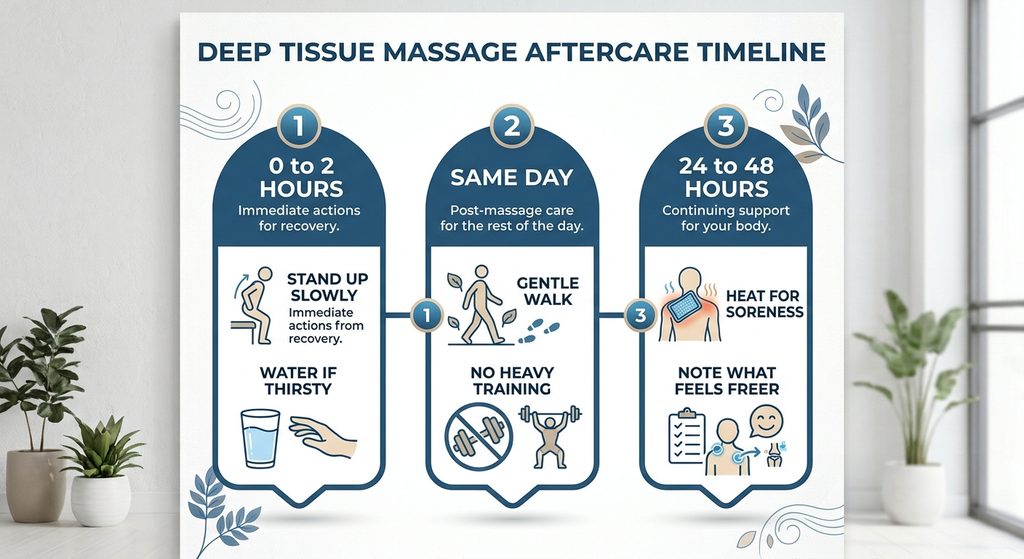
Aftercare Tips That Make Results Last
In the First Few Hours
Get up slowly, as some people feel briefly light-headed. Drink some water if you feel thirsty: it will not “flush out toxins”, as that claim is not supported by evidence, but staying hydrated helps you feel better after firm work.
For the Rest of the Day
Keep moving gently with a short walk, light stretching or simple neck and shoulder rolls. Avoid heavy gym sessions, long runs or very hot saunas for around 24 hours while tissues settle.
Over the Next 48 Hours
A warm shower or heat pack eases residual soreness. Notice which areas feel freer and which tighten up again quickly, and tell your therapist next time so the session can be adjusted.
Between Appointments
Results last longer when the cause of tension changes too. Take screen breaks every 30 minutes, check your desk set-up and keep up any stretches your therapist suggests.
How Often Should You Book?
For a specific problem, such as a stiff neck that has lingered for months, two to four sessions a week or two apart usually show whether massage is the right fit. After that, many patients move to every three to four weeks for maintenance. If there is no meaningful change after three sessions, we will suggest an assessment with a chiropractor or physiotherapist instead.
A Typical Clinical Picture
A composite example drawn from common presentations, not a single patient’s story.
Presentation: A 41-year-old project manager in Canary Wharf with a constant ache across the top of both shoulders, a knot under the right shoulder blade and tension headaches three or four afternoons a week.
Assessment: Raised tone in the upper trapezius and levator scapulae, active trigger points at the base of the skull and reduced neck rotation to the right. No nerve symptoms.
Plan: Three deep tissue sessions a fortnight apart focusing on the upper back, neck and skull base, combined with a monitor height change, hourly shoulder rolls and a simple chin tuck exercise. Headache frequency and neck rotation are reviewed at each visit before moving to monthly maintenance.
Deep Tissue Massage in London
We offer deep tissue massage in London as part of a team that also includes chiropractors and physiotherapists, so if your symptoms need more than massage, you can be referred within the same clinic. Our deep tissue massage Canary Wharf appointments run from the Port East Building, a short walk from the Elizabeth line, Jubilee line and DLR. Our Monument clinic offers chiropractic care. Across our clinics we hold a 4.9 average rating from more than 300 patient reviews, and we are registered with major private medical insurers including AXA PPP and Bupa.
Frequently Asked Questions
-
Does deep tissue massage hurt?
It can feel intense over tight areas, but it should not be painful to the point where you tense up or hold your breath. Most people describe a “good” discomfort that eases as the muscle releases. Your therapist should check in regularly and adjust pressure. If you are tensing against the pressure, the muscle cannot relax, so firmer is not always better. Always say if anything feels sharp or wrong.
-
How long does soreness last after a deep tissue massage?
Most people feel some tenderness for 24 to 48 hours, similar to the ache after a gym session. It is usually strongest the next morning and fades steadily. Gentle movement, a warm shower and light stretching help it settle faster. Soreness that is sharp, getting worse or still present after three days is not typical, and you should contact your therapist or GP for advice.
-
Is it normal to feel tired after a deep tissue massage?
Yes. Feeling tired, relaxed or slightly light-headed afterwards is common, especially after a first session or when a lot of tension has been released. Your nervous system shifts towards a resting state, which many people find helps them sleep well that night. Stand up slowly after treatment, have something to drink if you feel thirsty and avoid strenuous exercise for the rest of the day.
-
How often should I get a deep tissue massage?
For a specific problem, two to four sessions spaced one to two weeks apart usually show whether massage is helping. Once symptoms settle, every three to four weeks is enough for most people to maintain the benefits. Office workers with recurring neck and shoulder tension often find monthly sessions work well. Your therapist will suggest a plan based on how quickly your tightness returns between visits.
-
Can deep tissue massage help lower back pain?
It can help, particularly when back pain is linked to tight muscles around the hips and lower spine. Research on chronic low back pain has shown meaningful reductions in pain and disability after a course of deep tissue massage. The best results come when massage is combined with regular movement and core strengthening. Back pain with leg symptoms, numbness or weakness should be assessed by a clinician first.
-
Should I drink water after a deep tissue massage?
Drinking water afterwards is sensible but not essential. The popular idea that massage releases toxins that need flushing out is not supported by evidence. Staying hydrated simply helps you feel better, especially if you feel slightly light-headed or thirsty after firm work. Combine it with gentle movement and a warm shower, and save intense workouts or alcohol for the following day to give your muscles time to settle.
Book a Deep Tissue Massage
If muscle tension is affecting your work, sleep or training, our team can assess where it is coming from and tailor each session to you.
- Phone: 020 7531 4444
- Email: info@thisislondonwellness.com
- Canary Wharf (massage, physiotherapy and chiropractic): Port East Building, 14 Hertsmere Rd, London E14 4AF
- Monument (chiropractic): The Light Centre, 36 St Mary at Hill, London EC3R 8DU
Lasting relief comes from releasing tension and changing what causes it, one session at a time.