
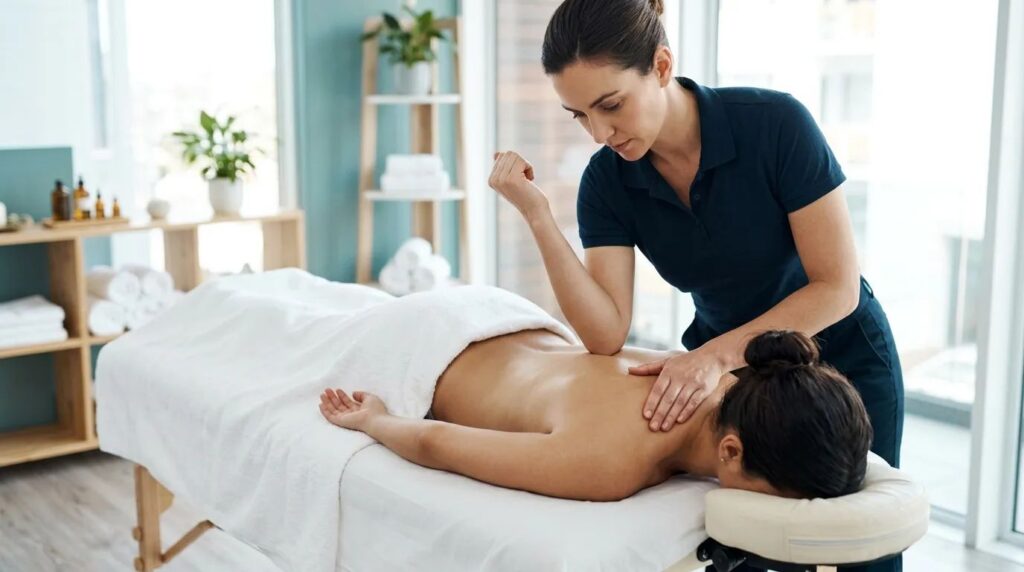
Walk into any clinic and ask for a firm massage, and you will often be offered two options that sound almost interchangeable: sports massage and deep tissue massage. Both dig into tight, aching muscles, both leave you feeling worked on rather than gently soothed, and both get recommended for everything from bad backs to marathon training. So the sports massage vs deep tissue massage question is a fair one, because while they overlap, they are not the same thing, and picking the right one makes a real difference to the result. If you are searching for your nearest wellness centre near me, here is how to tell them apart and choose well.
The Short Answer
Both are firm, therapeutic forms of massage that work deeper than a relaxing spa treatment, but they are built around different goals. Sports massage is oriented towards movement: recovering from training, staying flexible and reducing injury risk, often tailored to the activity you do. Deep tissue massage is oriented towards tension: releasing chronic tightness and knots in the deeper layers of muscle and connective tissue, wherever they have built up.
The confusion is understandable, because a good therapist borrows techniques from both. But if you know what each is actually for, you can walk in and ask for exactly what your body needs.
What Is Sports Massage?
Despite the name, sports massage is not just for elite athletes. It suits anyone who is physically active, from weekend runners and gym-goers to office workers who cycle to work or play five-a-side on a Thursday. The aim is to keep the muscles working well: aiding recovery, improving flexibility and range of motion, and heading off the niggles that turn into injuries.
Sports massage uses a varied toolkit rather than one single stroke. A therapist might combine flowing warm-up strokes, kneading, trigger-point pressure and assisted stretching, adjusting the focus to the muscle groups you rely on most. The timing can vary too: lighter, stimulating work before an event, flushing and recovery work afterwards, and regular maintenance sessions in between. Research supports the recovery angle; a systematic review of massage and muscle soreness found it can meaningfully reduce the soreness that shows up in the days after hard exercise.
You can see how this fits into a wider treatment approach on the sports massage in London service page. And if you have ever pushed through an endurance event, you will know the value of good aftercare; the same principles apply to protecting your body’s recovery after a marathon.
What Is Deep Tissue Massage?
Deep tissue massage does what the name suggests: it targets the deeper layers of muscle and the connective tissue around them. Rather than being organised around sport, it is organised around tension, particularly the long-standing, stubborn kind that builds up slowly and refuses to shift on its own.
The technique tends to be slower and more sustained than sports massage. A therapist works methodically into a tight area using firm, deliberate pressure, easing through the layers rather than skating over the surface. It is especially useful for the knots and chronic tightness that come from hours at a desk, repetitive strain, poor posture or old patterns of holding tension in the neck, shoulders and lower back. The goal is to release that tightness, restore movement and reduce the ache that comes with it.
It is worth saying who deep tissue massage suits, because it is not only for people in pain. Plenty of otherwise healthy people carry a surprising amount of tension without realising, until a therapist finds it. If you notice your shoulders creeping up towards your ears by mid-afternoon, struggle to turn your head comfortably, or feel a persistent band of tightness across your upper back, that is exactly the territory deep tissue work is designed for. It tends to be a slower, more focused experience than sports massage, and it rewards patience: releasing tension that has built up over months does not happen in a rushed ten minutes.
Sports Massage vs Deep Tissue Massage: The Key Differences
Seen side by side, the distinction becomes much clearer. This is the comparison most people are really looking for.
| Feature | Sports Massage | Deep Tissue Massage |
|---|---|---|
| Main goal | Performance, recovery and injury prevention | Releasing chronic tension and knots |
| Best suited to | Active people and athletes, before or after activity | Long-standing tightness and postural strain |
| Techniques | Varied: warm-up strokes, kneading, trigger points, stretching | Slow, sustained, deep pressure |
| Typical focus | Muscle groups used in your activity | Specific problem areas wherever they are |
| When you have it | Pre-event, post-event or as maintenance | As needed, when tension has built up |

Which One Should You Choose?
The honest answer is that it depends on why you are booking. If your body is under the demands of training, running, lifting or any regular sport, and you want to recover better and stay injury-free, sports massage is usually the right call. If your problem is a stiff, knotted neck and shoulders from long hours at a laptop, or a lower back that has been tight for months, deep tissue massage targets exactly that.
In practice, many people sit somewhere in the middle, and this is where a skilled therapist earns their keep. Tell them your goal, whether that is bouncing back from a hard week of training or finally releasing a knot you have carried for a year, and they will blend the appropriate techniques rather than sticking rigidly to a label. For the many desk-based professionals around Canary Wharf and the City, that often means a session that borrows from both. If you are close by, booking sports massage in Canary Wharf makes it easy to fit treatment around a working day. And because so much of what massage helps with links back to how you move and train, it pairs naturally with care for any underlying sports injury.
Do They Hurt?
Both can feel intense, because both work firmly into the muscle, but neither should ever be unbearable. Deep tissue work on a stubborn knot can be uncomfortable in a “good pain” sort of way, the kind that makes you exhale and then feel looser afterwards. Sports massage varies with the techniques being used and the stage of your training.
The key is communication. Sharp, radiating or breath-holding pain is not the goal, and a good therapist will always want you to speak up so they can adjust the pressure. A day or two of mild soreness afterwards is common and normal, much like the feeling after a good workout. If soreness is severe or a specific spot feels genuinely injured rather than just worked, the NHS advice on muscle strains is a sensible reference point, and it is worth getting properly assessed before your next session.
How to Get the Most From Your Massage
A few simple habits make a real difference to how much you get out of either type of treatment:
- Be clear about your goal at the start, whether it is recovery, tension relief or preparing for an event.
- Drink plenty of water afterwards and avoid a brutal workout immediately following a deep session.
- Time it sensibly around training, with lighter work close to a big event and firmer work when you have recovery days ahead.
- Treat it as part of a routine rather than a one-off rescue, especially if you sit a lot or train hard.
- Pair it with stretching and strengthening so the benefits last beyond the treatment couch.
Choosing a Qualified Massage Therapist
Here is something many people do not realise: in the UK, massage therapy is not statutorily regulated in the way that chiropractic or podiatry is. Anyone can, in theory, call themselves a massage therapist. That makes choosing carefully all the more important.
Look for a therapist with recognised training, professional insurance and genuine experience with the type of work you need. A strong signal of quality is registration with an accredited body: you can check whether a therapist is registered with the CNHC, the UK’s independent, government-backed register for sports and remedial massage, which confirms they meet recognised standards of training and conduct. Beyond credentials, a good therapist listens, explains what they are doing, and adapts to your feedback rather than applying the same routine to everyone.
Book a Massage in London
Whether you need to recover from training or release months of built-up tension, the right treatment starts with telling a qualified therapist what you are after.
You can reach our team by phone on 020 7531 4444 or by email at info@thisislondonwellness.com. Appointments are available at:
- Canary Wharf: Port East Building, 14 Hertsmere Rd, London E14 4AF
- Monument: The Light Centre, 36 St Mary at Hill, London EC3R 8DU
Frequently Asked Questions
-
Is sports massage the same as deep tissue massage?
Not quite. They overlap, since both use firm pressure and work into the deeper muscle, but their goals differ. Sports massage is geared towards physical activity: recovery, flexibility and injury prevention, often tailored to how you train. Deep tissue massage focuses on releasing long-standing tension and knots in the deeper layers, wherever they have built up. A skilled therapist often blends elements of both, which is partly why the two are so easily confused.
-
Which is better, sports massage or deep tissue massage?
Neither is better overall; it depends on what you need. If you train, run or play sport and want to recover well and stay injury-free, sports massage is usually the better fit. If your problem is chronic tightness from desk work or poor posture, deep tissue massage targets exactly that. Many people benefit from a mix, so the best approach is to tell your therapist your goal and let them tailor the treatment.
-
Does deep tissue or sports massage hurt more?
Both can feel intense, since they work firmly into the muscle, but neither should be unbearable. Deep tissue work on a stubborn knot can be uncomfortable in a “good pain” way, while sports massage varies with the techniques used. Sharp or radiating pain is not normal, so always tell your therapist to ease off. Some soreness for a day or two afterwards is common and usually settles quickly with rest and water.
-
How often should I get a sports massage?
It depends on how active you are and your goals. Someone training hard or preparing for an event might benefit from regular sessions, while others do well with occasional maintenance when tension builds. Around a key event, timing matters more than frequency, with lighter work close to competition. The honest answer is that a good therapist will suggest a rhythm based on your training load rather than selling you a fixed schedule.
-
Can a massage help with a sports injury?
Massage can support recovery from many minor sports injuries and help manage the muscle tension around them, but it is not a cure-all. For an acute injury, the priority is proper assessment and appropriate early care rather than deep pressure straight away. Once you are past that stage, massage can aid mobility and comfort as part of a wider plan. If pain is severe or persistent, get it assessed before booking.
-
Where can I get a sports massage or deep tissue massage near me?
If you live or work in London, look for a clinic with properly trained, insured therapists rather than choosing on convenience alone. Checking that your therapist is registered with a recognised body gives you confidence in their standards. It also helps to pick somewhere that offers both sports and deep tissue massage, so your treatment can be tailored to you. Our team provides both across central and east London locations.
The best massage is not the firmest or the fanciest, it is the one matched to what your body actually needs, so tell your therapist your goal and let the right technique do the work.